
Let Us Be Content
Free sheet music at https://www.patreon.com/posts/let-us-be-102788622
Happiness is so dependent on our thoughts, and thoughts of gratitude and contentment for the things we have make up a great portion of that good feeling. People living in impoverished nations consistently rank higher in studies of happiness than we do in the states, not because they have more, but because they’re happy with what they have. Striving has been a great source of stress and unhappiness in my life, and though it was a hard pill to swallow, I have tried to let this verse seep into my heart.
1 Timothy 6 : 6-8 But godliness with contentment is great gain. For we brought nothing into this world, and it is certain we can carry nothing out. And having food and raiment let us be therewith content.
We Shall Ever Be with the Lord – Project Paul (Free Sheet Music)
Find free sheet music for this setting at https://www.patreon.com/posts/we-shall-ever-be-102476851
1 Thessalonians 4:16-17
For the Lord himself shall descend from heaven with a shout, with the voice of the archangel, and with the trump of God: and the dead in Christ shall rise first: Then we which are alive and remain shall be caught up together with them in the clouds, to meet the Lord in the air: and so shall we ever be with the Lord.
Ukulele Club: Easter Season
In honor of the Easter season we’ll be doing the classics Amazing Grace, Ride On King Jesus, and a new song from the 2024 youth album Disciple of Christ: Savior of My Soul. RSVP for April 10th, 6:30-7:30pm at https://forms.gle/ApNxYUkJZsw6oiLV9 and download the free music to bring on your device or print. If there’s extra time we’ll tackle more of Blue Skies.
Uke Club: Spring in Full Swing
Utah County Ukulele Club: With Spring in full swing, we’ll be visiting a few songs with a focus on the change of the seasons. RSVP for March 27th, 6:30-7:30pm at https://forms.gle/ApNxYUkJZsw6oiLV9 and download the free music at https://www.patreon.com/posts/100862693 to bring on your device or print. We’ll tackle a medley of super easy ‘primary songs’ that evoke melting snow, rain falling, the return of birds, and the life-giving effects of little streams. Then we’ll visit the well-known Spanish folk song De Colores, which celebrates the return of the Spring’s colors. Wrapping up, we’ll begin work on Blue Skies, the famous Irving Berlin jazz standard – this one has a bunch of chords, so we will return to it in coming weeks.
Ukulele Bootcamp Now Completely FREE
The online version of Ukulele Bootcamp is where you will learn all about ukuleles, how to learn a song, stretches and warmups, tuning, holding the ukulele, how to read chords, strumming, tablature, the C scale, your first chords and a dozen songs. Over a decade of ukulele teaching went into creating this course and now you can enjoy it for free.
Walk in Love (Ephesians 5:1-2)
A bit of a campfire song. This one is the last of those I recorded in ‘wave 2’ of this project. It may be into 2024 before I record more settings, with the Christmas season now in full swing.
Visit Project Paul for free sheet music for this and all my other settings released so far of verses from Paul’s letters.
Be Ye Kind (Ephesians 4:31-32)
With a moderate swing … “Let all bitterness, and wrath, and anger, and clamour, and evil speaking, be put away from you, with all malice: And be ye kind one to another, tenderhearted, forgiving one another, even as God for Christ’s sake hath forgiven you.”
Visit Project Paul for free sheet music for this and all my other settings released so far of verses from Paul’s letters.
The Household of God
Another setting from Project Paul (now with 10 songs posted), The Household of God, is now available as a free sheet music download at https://www.patreon.com/posts/household-of-god-92032444 along with a demonstration video. You don’t need to be a patron to download this music, though support is appreciated. Enjoy! Ryan
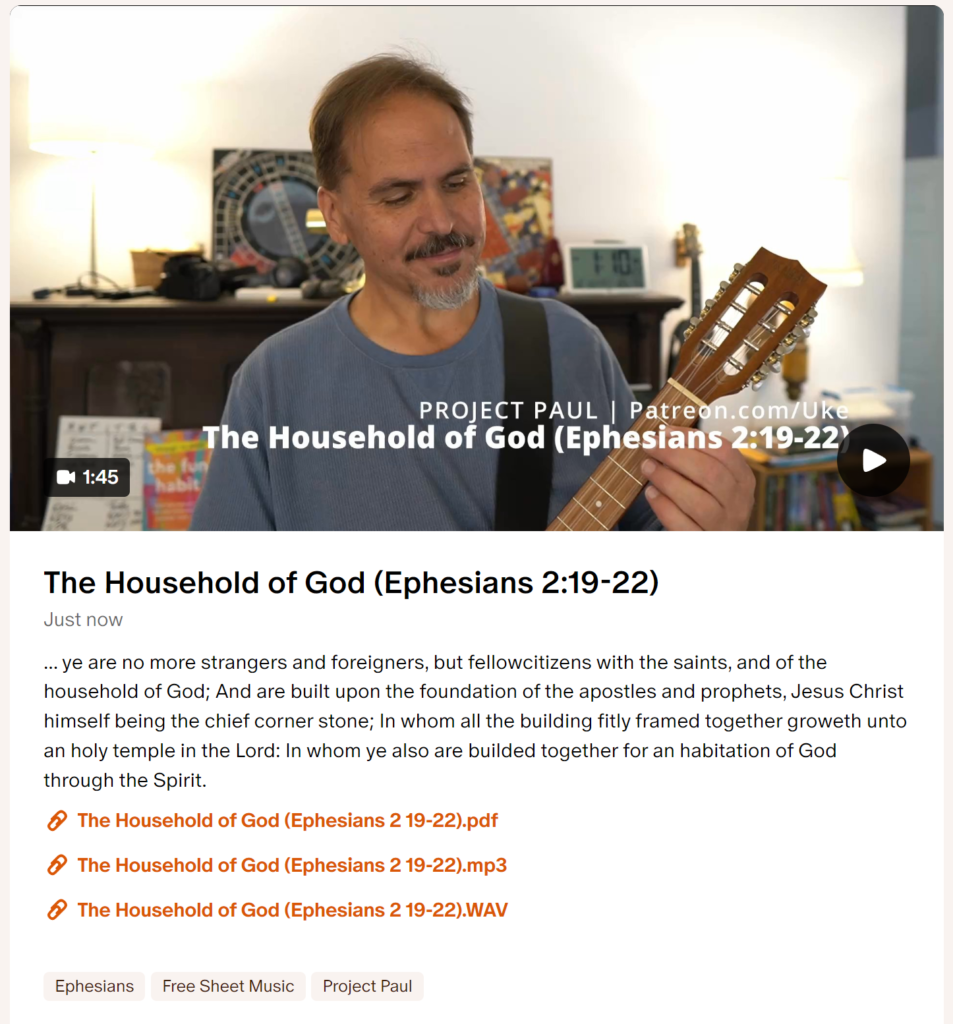
Project Paul
I wrote these settings of Paul’s epistles hoping to get to know him and his writings better. I’m sharing them freely (videos, mp3s, PDFs, chord chart). The first 8 of the settings are now available at bit.ly/projectpaulmusic
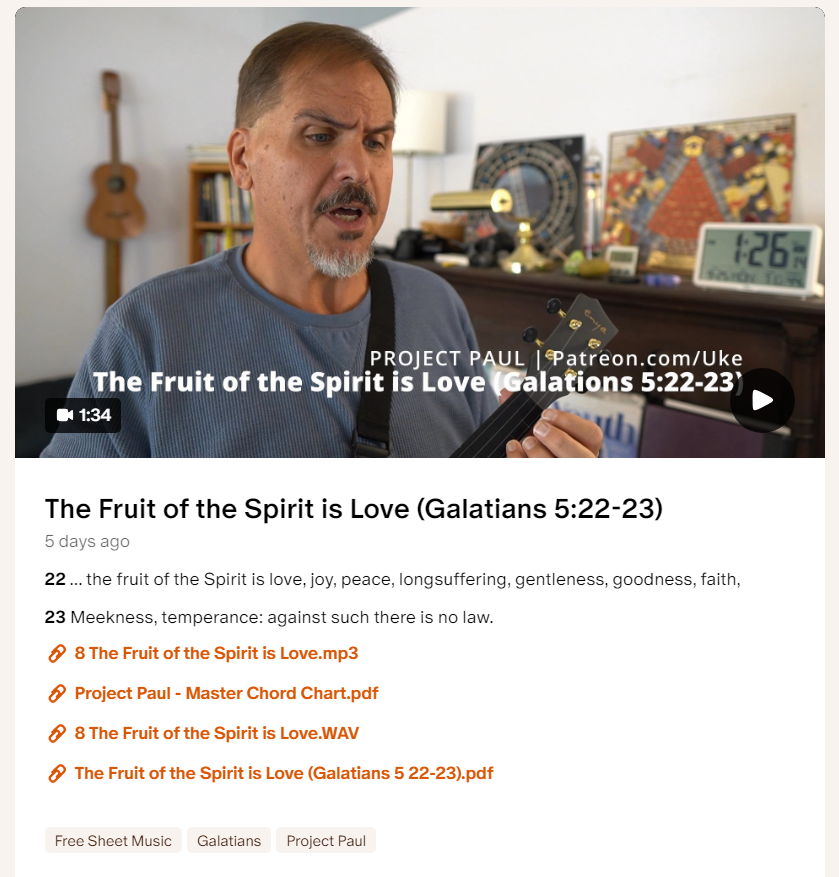
Not Ashamed of the Gospel of Christ
I began writing these scripture settings last year, focusing on the epistles of Paul, simply because I’ve always found his writings a little difficult and I wanted to lean in and understand them better. Looking for scriptures to set to music really makes you slow down and read carefully … something beautiful, uplifting and concise. I thought this scripture particularly, the latest I’ve set, would make a good introduction to Paul and his letters. Free sheet music at https://www.patreon.com/posts/82809358 .
50+ Holiday Songs to Hit the Billboard Charts

I generally don’t mind most holiday songs (with the exception of ‘Last Christmas’ which sounds like it was written by a tween – the inclusion of the word ‘special’ really gets my goat), and generally I am a sucker for the romantic ones that aren’t really about Christmas at all (I’ve got Your Love to Keep me Warm – Ella & Satchmo have got my number). Before going through this data though, I had never heard of many of these songs before. Instead of dwelling on the bad pennies, some surprised me by being clever, poignant or well-written … AND I was glad to see a trend of more actual Christmas songs breaking into this mostly secular list in recent years.
- Better Days (Goo Goo Dolls) – I may not agree with every word of this song, but it seems heartfelt and sincere and promotes forgiveness … one of Christ’s key teachings.
- Child of God (Bobby Darin) – Who doesn’t love a good spiritual? This got on in the early days of the Billboard charts, in the early days of the folk revival.
- Christmas for Cowboys (John Denver) – A simple song that recognizes simple gifts and acknowledges Christmas as a day for prayer, even for cowboys. I love Denver’s voice.
- Christmas Tree Farm (Taylor Swift) – I honestly don’t know what to make of Taylor Swift, but this is a nice addition to the holiday love song category. I really like the image of having a Christmas Tree Farm in my heart, growing lovely green trees that will go out to bring joy to the world. “Sweet dreams of holly and ribbon / Mistakes are forgiven” expresses that forgiveness theme and is a nice slant rhyme to boot.
- Favorite Time Of Year (Carrie Underwood) – A feel-good song, maybe not poignant, but fun.
- Hallelujah (Carrie Underwood & John Legend) – NO! It’s not a Christmas adaptation of the overly-covered Leonard Cohen song. A lovely duet that hints at real Christmas themes … “Let the world stand still, the church bells ring, Silent night as the angels sing, Hallelujah, Hallelujah … Ooh, let thеre be peace on earth, Let the lonely join together, let them know their worth, Ooh, let the children know, There’s a brighter day ahead (let’s hold on to hope).”
- It Doesn’t Have to Be That Way (Jim Croce) – It’s Christmas, let’s get back together! Why not? Nice to hear something folk-y on the list. 🙂
- Like it’s Christmas (Jonas Brothers) – Another fun addition to the holiday love song category.
- Mistletoe (Justin Bieber) – Most songs in this list do their best to ignore the elements of the Christmas story … even though its making a love song metaphor, I like the phrase “the wise men followed the star, the way I followed my heart” (which assumes people know the story of the wise men). Minus points for using ‘shawty’.
- Silent Night (Carrie Underwood) – It was nice to see the actual most popular Christmas song of all time make a blip on this list devoted to radio play.
- Someday at Christmas (Lizzo) – A recent cover of this Stevie Wonder Christmas against War song. The years have a had number of these kinds of songs, particularly coming from the sixties and seventies. I hadn’t heard this one before, and as it led me to Stevie Wonder’s original, I was glad to hear about it.
- Take Me Home For Christmas (Dan + Shay) – I like that the protagonist of this song is brave enough to declare to his sweetheart “take ME home for Christmas” instead of imploring Santa to drop off a relationship at the door. It’s a good image, giving yourself as a gift at Christmastime.
- The First Noel (Gabby Barrett) – Yea! Another traditional real Christmas song to blip into the top 100.
Well, that’s it. Almost everything else new was a variation on “All I Want for Christmas is You.” The other songs on the list, many of which I like, are so common as to need no commentary. Here is the list I compiled of almost every holiday song that has been on the top Billboard charts since they began in the late 1950s (may this list, checked twice, provide you some inspiration for new songs to play):
- A Holly Jolly Christmas (Burl Ives)
- All I Want for Christmas is You (Mariah Carey)
- Baby, it’s Cold Outside (Dean Martin)
- Better Days (Goo Goo Dolls)
- Blue Christmas (Elvis Presley)
- Child of God (Bobby Darin)
- Christmas (Baby Please Come Home) (Darlene Love)
- Christmas for Cowboys (John Denver)
- Christmas Tree Farm (Taylor Swift)
- Cozy Little Christmas (Katy Perry)
- Deck the Halls (Nat King Cole)
- Favorite Time Of Year (Carrie Underwood)
- Feliz Navidad (Jose Feliciano)
- Hallelujah (Carrie Underwood & John Legend)
- Happy Holiday | The Holiday Season (Andy Williams)
- Happy Xmas (War is Over) (John & Yoko)
- Have Yourself a Merry Little Christmas (Michael Bublé)
- Here Comes Santa Clause (Gene Autrey)
- I’ll be Home for Christmas (Josh Groban & Kelly Clarkson & Bing Crosby & Camila Cabello)
- It Doesn’t Have to Be That Way (Jim Croce)
- It’s Beginning to Look a Lot Like Christmas (Perry Como)
- It’s the Most Wonderful Time of the Year (Andy Williams)
- Jingle Bell Rock (Bobby Helms)
- Jingle Bells (Frank Sinatra)
- Last Christmas (Wham!)
- Let it Snow! Let it Snow! Let it Snow! (Dean Martin)
- Like it’s Christmas (Jonas Brothers)
- Mary Did You Know? (Pentatonix)
- Mele Kalikimaka (Bing Crosby and the Andrews Sisters)
- Merry Christmas (Ed Sheeran & Elton John)
- Merry Christmas Baby (Chuck Berry)
- Mistletoe (Justin Bieber)
- Oh Santa! (Mariah Carey)
- Pick Out A Christmas Tree (Dan + Shay)
- Please Come Home for Christmas (Eagles)
- River (Sarah McLachlan)
- Rockin’ Around the Christmas Tree (Brenda Lee & Justin Bieber)
- Rudolph the Red-Nosed Reindeer (Gene Autrey)
- Run Rudolph Run (Chuck Berry)
- Santa Baby (Eartha Kitt)
- Santa Claus is Coming to Town (Jackson 5)
- Santa Tell Me (Ariana Grande)
- Santa, Can’t You Hear Me (Kelly Clarkson & Ariana Grande)
- Silent Night (Carrie Underwood)
- Sleigh Ride (The Ronettes)
- Someday at Christmas (Lizzo)
- Take Me Home For Christmas (Dan + Shay)
- The Chipmunk Song (The Chipmunks)
- The Christmas Song (Nat King Cole & Lauren Daigle)
- The First Noel (Gabby Barrett)
- There’s No Place Like Home for the Holidays (Perry Como)
- This Christmas (Chris Brown & Donny Hathaway)
- Under The Mistletoe (Kelly Clarkson and Brett Eldredge)
- Underneath the Tree (Kelly Clarkson)
- What Can You Get a Wookie for Christmas
- Where are You Christmas? (Faith Hill)
- White Christmas (Bing Crosby & The Drifters)
- Wonderful Christmastime (Paul McCartney)
- You’re a Mean One, Mr. Grinch (Thurl Ravenscroft)
Which are your favorites? Which do you never want to hear again? What songs are new surprises for you?
Go Tell it on the Mountain
When I was young, I didn’t really like this song … it was so far outside my cultural experience and people tend to like the kind of music they’re familiar with. When I got into high school, we had a great choral program that exposed me to all kinds of music I never would have known about otherwise, from all over the world. Spirituals were a big part of that exposure to a larger musical landscape and inspired me to make purchases of music from artists outside the states in the 90s from musicians I otherwise would have had no contact with. I also purchased recordings of bipoc artists in the USA that I probably would have had no exposure to without that educational experience … these purchases included a recording of a Carnegie Hall Christmas concert featuring Jessye Norman, Kathleen Battle and Wynton Marsalis from which I came to love “Go Tell it on the Mountain.”
Free sheet music for supporters at https://www.patreon.com/posts/76005925
The Reason for the Season (Ukulele Cover)
I kicked off a 12 Days of Christmas countdown yesterday with THE REASON FOR THE SEASON, a collaboration I finished last year with Michael Young, who wrote the lyrics for my tune with only the title as a guide (thanks Michael!).
NEW! Get The Reason for the Season on Sheet Music Direct now (lead sheet with ukulele chords).
The reason for the season comes wrapped in swaddling clothes,
Not masked in pretty paper, or tied with fancy bows.
The reason for the season comes from the humble stall,
And not with lights or pressing crowds, like in a shopping mall.
The reason for the season speaks to the quiet throng,
Who set aside all pride of heart to hear the angel’s song.
The reason for the season came here to show the way,
Come celebrate by offering you heart to him to day.
The reason for the season comes though no place was found,
And not unto a palace hall with servants hovering round.
The reason for the season, first sung by angel choir,
Still heralds at this holy time to kindle and inspire.
The reason for the season comes in this baby boy,
Who soon will reign a mighty king, as millions shout for joy.
The reason for the season came here to show the way,
Come celebrate by offering you heart to him to day.
‘The Reason for the Season’ for 2-part choir is also available.
“Thanksgiving Sessions” Complete Playlist
Celebrating the release of my updated Thanksgiving! (2022) collection of seasonal songs for voice and ukulele, I recorded videos of 8 of the 14 songs in the collection. Please enjoy the Thanksgiving Sessions playlist on YouTube.
Links in the video descriptions will lead you to the collection if you’re interested in the sheet music. Otherwise, just just enjoy! Wishing you a blessed, joyful and glorious Thanksgiving weekend!
Thanksgiving Alleluia (Thanksgiving Sessions)
An original song I wrote some years ago. Written in the key of C, I’m playing it on an ukulele tuned up a step to D (A D F# B). Free sheet music and mp3 recording for patrons at https://www.patreon.com/posts/75030704
Get the music for all 14 songs in the Thanksgiving! (2022) collection on Sheet Music Direct.
Harvest Hymn (Thanksgiving Sessions)
This is one of those ‘end of the world’ type of hymns, words by Jeremiah Ingalls, and new music. Sheet music and mp3 recording free for patrons at https://www.patreon.com/posts/75028933
Get the music for all 14 songs in the Thanksgiving! (2022) collection on Sheet Music Direct.
Father, We Thank Thee (Thanksgiving Sessions)
A lovely text often attributed to Ralph Waldo Emerson (disputed) with a new musical setting. Free mp3 recording and sheet music for patrons at https://www.patreon.com/posts/75028438.
Get the music for all 14 songs in the Thanksgiving! (2022) collection on Sheet Music Direct.
Come, Ye Thankful People, Come (Thanksgiving Sessions)
An energetic cover of a classic hymn. Free sheet music and mp3 recording for patrons at https://www.patreon.com/posts/come-ye-thankful-74991828
Behold! The Harvest Wide Extends (Thanksgiving Sessions)
My musical setting of hymn texts by Parley Parker Pratt, a truly great hymn writer.
Free sheet music and mp3 recording for patrons at https://www.patreon.com/posts/behold-harvest-74990804
Get the music for all 14 songs in the Thanksgiving! (2022) collection on Sheet Music Direct.
All Good Gifts (Thanksgiving Sessions)
Last week I shared the sheet music for my original setting of All Good Gifts; here is a video to go along with it.
Get the music for all 14 songs in the Thanksgiving! (2022) collection on Sheet Music Direct.
All Glory, Laud & Honor (Thanksgiving Sessions)
Last week I shared the sheet music for All Glory, Laud & Honor; here is a video to go along with it (1st and 3rd verses).
Get the music for all 14 songs in the Thanksgiving! (2022) collection on Sheet Music Direct.
Thanksgiving Day is Very Near – Children’s Song (Thanksgiving Sessions)
A short little setting of a classic children’s poem, Thanksgiving Day is Very Near. I’m a little nostalgic for this childhood I never had (having grown up in the Southern California metropolis) …
When all the leaves are off the boughs,
And nuts and apples gathered in,
And cornstalks waiting for the cows,
And pumpkins safe in barn and bin,
Then Mother says, “My children dear,
The fields are brown, and autumn flies;
Thanksgiving Day is very near,
And we must make thanksgiving pies!”
Free pdf and mp3 for patrons at https://www.patreon.com/posts/74408481.
Sheet music is also available for purchase on Sheet Music Plus.
All Good Gifts : Ukulele Solo or Duet
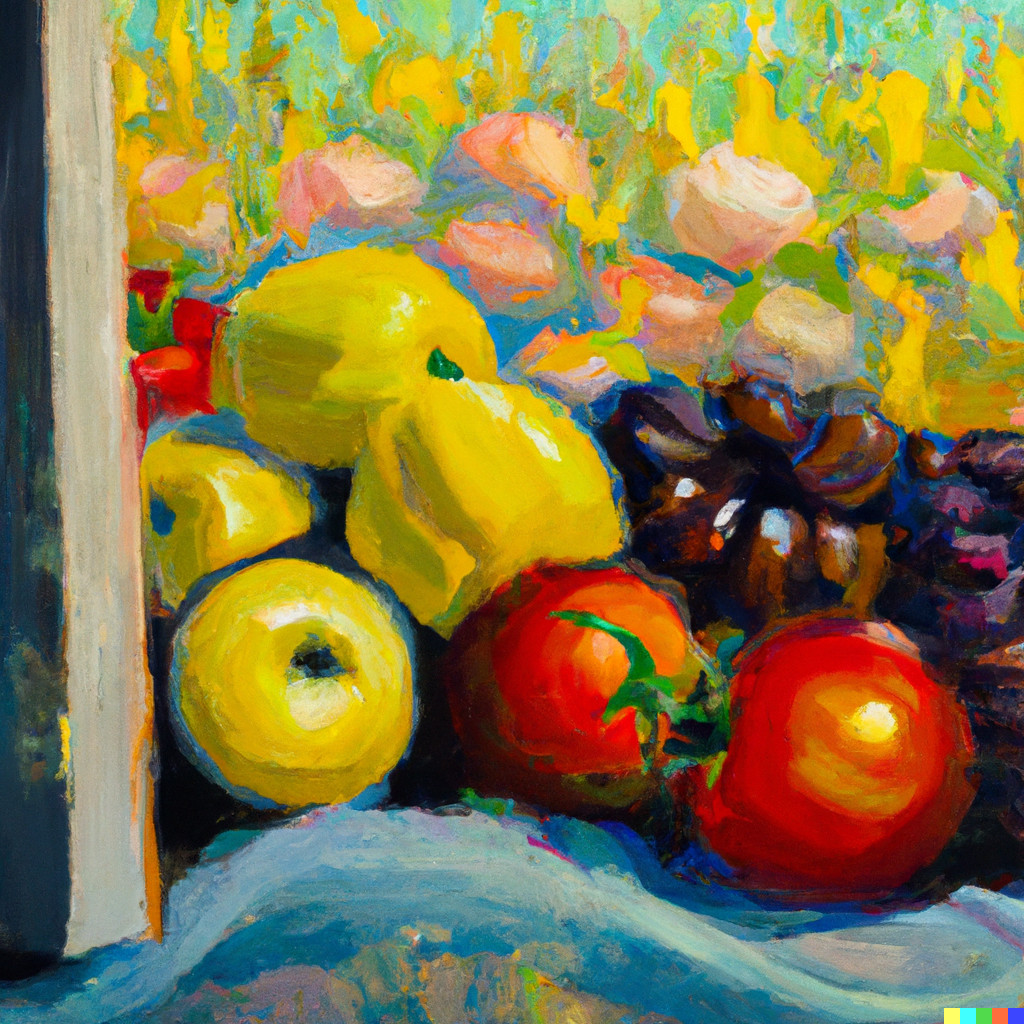
M Ryan Taylor via DALL-E
I first heard the public domain text We Plough the Fields and Scatter when I performed as a teenager in a production of the musical Godspell, known there as All Good Gifts. I loved the text and I loved the setting, but I wanted my own version that I could sing whenever/wherever without worrying about copyright. So I wrote my own melody, included it in my Thanksgiving! songbook, arranged it for choir and sang it a few times with choirs I’ve conducted over the years.
Here is my 2022 revision for voice and ukulele chords:
- All Good Gifts – Solo (PDF)
I’ve also created a duet version as an exclusive for my supporters:
- All Good Gifts – Duet (PDF on Patreon.com/Uke)
I hope you enjoy it. Happy Thanksgiving!
Requests and Other Ways to Support New Content on UkulelePlay.com
How would you like to be able to request a new arrangement of a song for ukulele once a month? Check out the new “Uke Are Awesome!” membership tier https://www.patreon.com/uke/membership.
Here’s a current breakdown of ways you can support creative work here on UkulelePlay.com:
Uke Can Do It!
$5/month
- Send some friendly applause for all the free content Ryan posts to UkulelePlay.com, facebook.com/uke.n.me and youtube.com/@UkeMe
Uke & Me Friends
$10/month
- Early access to videos & articles before they’re made available to the public.
- PDF downloads of new original songs & arrangements of folk/classical tunes for ukulele as they are written.
- Library access to hundreds songs published in Ryan’s books.
Uke Are Awesome!
$45/month
- Choose a folk song, holiday or classical tune (from the public domain) for Ryan to arrange once a month. You’ll get it emailed to you before its posted anywhere else.
- All the benefits of the other tiers.
All Glory, Laud and Honor Solo/Duet
Some years ago I had the thought to pair Gustav Holst’s famous Thaxted theme (classical fans will know it as Jupiter from the symphonic masterpiece The Planets) with the words of the well-known hymn All Glory, Laud and Honor. I arranged it for choir, organ, piano and strings, adding a newly composed descant to the last verse.
Today I was going through music I’ve written for Thanksgiving (just around the corner!) and I thought this would make a great solo or duet. I transposed it, figured out appropriate chords and made an ukulele chord chart to tack to the back:
- All Glory, Laud & Honor (PDF): Solo/Duet lead sheet with ukulele chords.
I hope you take as much joy in this melody as I do! Let me know if you learn, perform or record this music … I’d love to share any videos or recordings here on UkulelePlay.com or on Uke & Me via FB (feel free to connect with me there!).
by M. Ryan Taylor via Night Café (Stable Diffusion)